The best time for planting trees and shrubs in Salt Lake City is during the early to mid-spring after the soil has thawed or in the fall. Fall planting should occur about three to four weeks before the ground freezes. These periods provide moderate temperatures that help new plants establish strong root systems before the stress of summer heat or deep winter frost.
Adding a tree to your landscape is a long-term investment that provides shade, beauty, and value for years to come. But success starts with planting at the right time. This guide will walk you through the optimal seasons for planting in the Salt Lake City area and provide essential tips to help your new trees and shrubs thrive.
Understanding Salt Lake City's Unique Climate
Salt Lake City's high-desert climate presents unique challenges and opportunities for gardeners. We experience cold, snowy winters and hot, dry summers. This wide range in temperatures means that timing is crucial for giving new plants a healthy start. One of the most important factors to consider is the frost-free growing season.
According to Utah State University Extension, average last spring frost dates along the Wasatch Front can vary depending on your specific location and elevation. For example, the Salt Lake City Airport averages a last frost date of April 26, while the higher-elevation University of Utah area averages May 1. Knowing the typical frost dates for your neighborhood helps you schedule your spring planting to avoid damage to tender new growth.
The Case for Spring Planting
Early to mid-spring is an excellent time for planting most trees and shrubs in Salt Lake City. As the soil thaws and warms up, it becomes workable and ready to support new root growth. Planting in spring gives your tree the entire growing season to establish its root system before facing the stress of its first winter.
Key benefits of spring planting include:
- Available Moisture: Spring often brings more consistent rainfall, which helps keep the soil around a new tree moist.
- Active Growth: The tree can immediately begin its natural growth cycle, developing both roots and foliage.
- Wide Selection: Nurseries are typically fully stocked in spring, offering the best selection of tree and shrub species.
For best results, aim to plant after the soil is no longer frozen or waterlogged but before the summer heat arrives. This window allows the tree to acclimate without the dual stress of transplant shock and extreme temperatures.
The Advantages of Fall Planting
Fall is the other prime season for planting trees in our region. Planting in late September, October, or even early November offers distinct advantages. The air temperatures are cooler, which reduces water loss and stress on the plant, but the soil is still warm from the summer. This combination creates a perfect environment for vigorous root development.
A tree planted in the fall can focus all its energy on establishing a strong root system without having to support new leaf or stem growth. When spring arrives, it will be well-anchored and ready for a burst of growth. The USU Extension recommends planting new trees and shrubs three to four weeks before the ground freezes. This gives them enough time to settle in before going dormant for the winter.
Step-by-Step Tree Planting Guide
Proper planting technique is just as important as timing. Following these steps will significantly increase your tree's chance of survival and long-term health.
- Choose the Right Tree: Select a species that is well-suited to Salt Lake City's climate and your specific site conditions (sun, soil, space). If you need guidance, our plant material coordination services can help you source healthy, appropriate trees for your landscape.
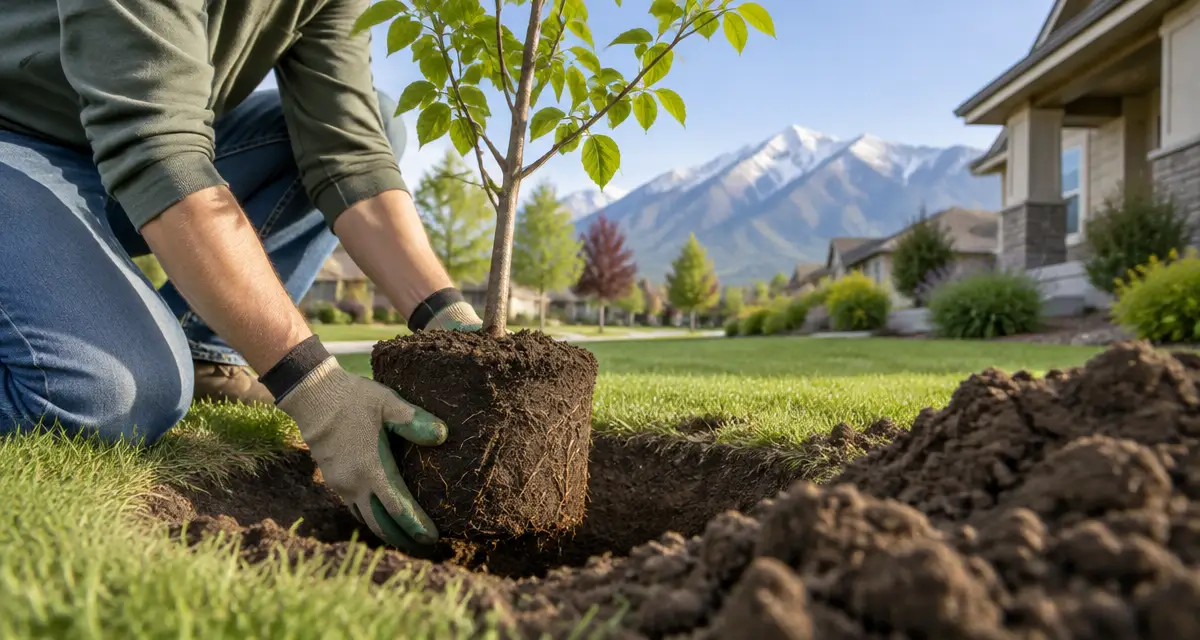
- Dig the Right Hole: Dig a hole that is two to three times wider than the tree's root ball but only as deep as the root ball itself. The top of the root ball should sit level with or slightly above the surrounding ground.
- Prepare the Tree: Carefully remove the tree from its container. If it's in a wire basket or burlap, remove as much of the material as possible. Gently loosen any circling roots to encourage them to grow outward into the soil.
- Place and Backfill: Position the tree in the center of the hole, ensuring it is straight. Backfill the hole with the original soil you removed. There's no need to add amendments, as this can discourage roots from growing beyond the planting hole.
- Water Thoroughly: Once the hole is filled, water the tree deeply to settle the soil and eliminate air pockets. A slow, steady stream of water is best.
- Apply Mulch: Spread a 2 to 3-inch layer of organic mulch, like wood chips, around the base of the tree. Keep the mulch a few inches away from the trunk to prevent rot and pest issues.
Post-Planting Care for Healthy Establishment
Your work isn't done after the tree is in the ground. Consistent aftercare is vital for the first couple of years.
Watering is the most critical task. A newly planted tree needs regular, deep watering to encourage its roots to grow deep into the soil. For fall-planted trees, it is crucial to continue watering during dry spells until the ground freezes. As noted by the USU Extension, this ensures the plant stays hydrated through the winter.
Check the soil moisture every few days by digging down a few inches near the root ball. If it feels dry, it's time to water again. As the tree becomes established over the next year or two, you can gradually reduce the frequency of watering.
How Professional Landscape Design Can Help
Choosing the right tree and planting it correctly is just one part of creating a cohesive and thriving outdoor space. A professional landscape design considers your entire property, ensuring new trees enhance your home’s architecture, fit with existing plants, and meet your long-term goals for shade and privacy.
At Alpina Studio, our landscape consultations can help you develop a beautiful and sustainable plan that flourishes in Utah's unique environment. We help you select the right plants for the right places, ensuring a successful landscape for years to come. Ready to transform your vision into reality? Contact us today to get started.
Frequently Asked Questions
How deep should I plant a new tree?
Plant your tree so the top of the root ball is level with or slightly above the surrounding soil. Planting too deep is a common mistake and can lead to root rot and other problems.
Should I fertilize a newly planted tree?
It's generally best to wait. Most experts recommend not fertilizing a tree in its first year. The priority is for the tree to establish its root system, and transplanting already provides enough stress. Focus on proper watering instead.
What are the worst times to plant trees in Salt Lake City?
The worst times to plant are the peak of summer when high heat and dry conditions cause extreme stress, and in deep winter when the ground is frozen solid. Stick to the spring and fall planting windows for the best results.
How often should I water a new tree?
A new tree typically needs a deep watering two to three times per week for the first few weeks, depending on rainfall and temperature. The goal is to keep the root ball and surrounding soil consistently moist but not waterlogged.