
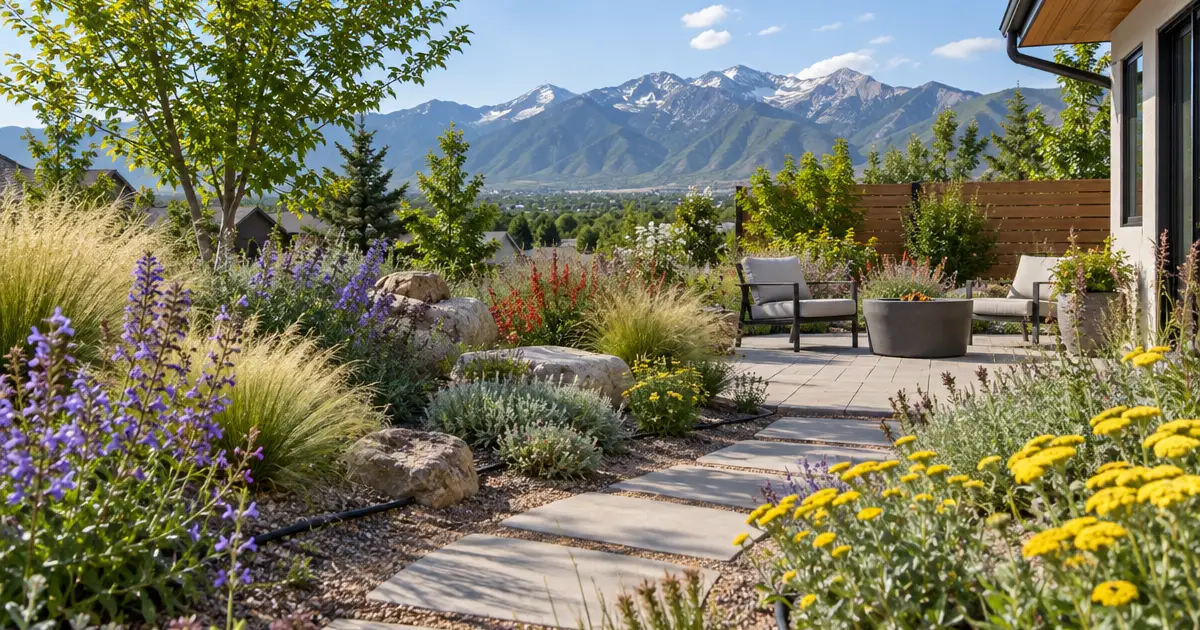
Planning a water-wise landscape in Salt Lake City is a smart, sustainable choice that creates a beautiful outdoor space without straining our precious water resources. This approach, also known as xeriscaping, involves thoughtful design, careful plant selection, and efficient irrigation to build a yard that thrives in Utah's unique climate. The result is a stunning landscape that is both environmentally friendly and easier to maintain.
Why Water-Wise Landscaping is Essential in Salt Lake City
Living along the Wasatch Front means being mindful of our water usage. Utah is one of the driest states in the nation, and conserving water is a collective responsibility that protects our environment and economy. Water-wise landscaping directly addresses this need by significantly reducing the amount of water required for outdoor irrigation, which can account for over half of a household's annual water consumption.
Adopting these practices offers numerous benefits. You will see a noticeable decrease in your monthly water bills. You will also spend less time on maintenance, as native and adapted plants are naturally resilient to local conditions. Furthermore, according to Salt Lake City’s landscaping standards, thoughtful landscaping helps reduce urban heat, manage stormwater runoff, and create a healthier ecosystem for pollinators and local wildlife.
Core Principles of Water-Wise Design
A successful water-wise landscape starts with a solid plan. It’s more than just swapping out a few plants; it’s a holistic approach to your entire outdoor space. Integrating these core principles is key to creating a landscape that is both functional and beautiful.
- Thoughtful Planning: Before you dig, map out your yard. Consider sun exposure, soil type, and how you use different areas. A well-designed plan ensures every element has a purpose. Professional landscape consultations can provide expert guidance tailored to your specific property.
- Soil Improvement: Healthy soil is the foundation of a healthy garden. Amending your soil with compost and other organic matter helps it retain moisture more effectively, meaning you'll need to water less often. Good soil structure also promotes deep root growth, making plants stronger and more drought-resistant.
- Practical Turf Areas: Traditional grass lawns are one of the most water-intensive parts of a landscape. Consider reducing the size of your lawn to only what is necessary for recreation or aesthetic balance. Replace unused turf with beautiful, low-water garden beds, patios, or groundcovers.
- Mulching: Applying a layer of mulch (such as wood chips or bark) over your garden beds is one of the easiest ways to conserve water. Mulch insulates the soil, slows evaporation, prevents weed growth, and adds a clean, finished look to your landscape.
Choosing the Right Plants for a Utah Climate
Selecting plants that are suited for Utah’s climate is fundamental to water-wise landscaping. The right plants will not only survive but thrive with minimal intervention. According to Utah State University, choosing appropriate plants is a critical step in creating a sustainable garden.
One of the most effective strategies is hydrozoning, which involves grouping plants with similar water, sun, and soil needs together. This allows you to irrigate each zone more efficiently, giving plants exactly the amount of water they need without wasting any on those that need less. For example, a bed of low-water perennials would be on a separate irrigation zone from a small vegetable garden or turf area.
Focus on drought-tolerant species native to Utah or adapted to similar climates. These plants are naturally equipped to handle our hot summers and cold winters. Some excellent choices include:
- Penstemon
- Yarrow (Achillea)
- Serviceberry (Amelanchier)
- Blue Flax
- Ornamental grasses like Blue Avena Grass
Water-Wise Plants for Utah Landscapes is an excellent resource from the USU Extension for finding a wide variety of suitable options. A professional can also assist with sourcing high-quality plants through plant material coordination services.
Smart Watering Strategies for Your Yard
How and when you water is just as important as what you plant. The goal is to water deeply but infrequently, which encourages plants to develop deep, robust root systems. A well-established, water-wise landscape may only need watering once every two weeks or so, depending on the season and recent weather.
Install an efficient drip irrigation system for garden beds and groundcovers. Drip systems deliver water directly to the plant's root zone, minimizing loss to evaporation and wind. For any remaining lawn areas, use water-saving sprinkler heads and a smart controller that adjusts based on weather conditions.
Always water in the early morning to reduce evaporation. To take the guesswork out of your schedule, the Utah Division of Water Resources provides a Weekly Lawn Watering Guide with specific recommendations for different parts of the state, including Salt Lake City.
Bringing It All Together with Professional Design
While these principles provide a great starting point, integrating them into a cohesive and elegant design requires expertise. A professional landscape designer understands how to balance aesthetics with function, creating a plan that maximizes your property's potential while adhering to water-wise best practices.
Investing in professional landscape design ensures that your soil is properly prepared, your plant zones are logical, and your irrigation system is optimized. A designer can help you navigate local regulations and select the perfect combination of plants, hardscaping, and practical turf areas for a yard you’ll love for years to come. Alpina Studio provides expert landscaping services in Salt Lake City to help homeowners achieve their vision for a beautiful, sustainable outdoor space.
Frequently Asked Questions
Does water-wise landscaping mean only rocks and cactus?
Not at all. A water-wise landscape can be lush, colorful, and full of life. It’s about choosing a wide variety of beautiful plants—including flowers, shrubs, and grasses—that are naturally suited to our climate.
How much water can I really save?
By converting a traditional lawn to a water-wise landscape, homeowners can reduce their outdoor water use by 50% or more. This translates to significant savings on your water bill and a major positive impact on our community's water supply.
What is hydrozoning?
Hydrozoning is the practice of grouping plants together based on their water needs. This allows you to set up irrigation zones that deliver the right amount of water to each group, preventing overwatering or underwatering and maximizing efficiency.
Can I still have a lawn?
Yes. The key is to have a practical lawn area. A water-wise approach doesn't forbid grass but encourages limiting it to a size that is functional for your family's needs, such as for children to play on, while using low-water plants for the rest of the yard.