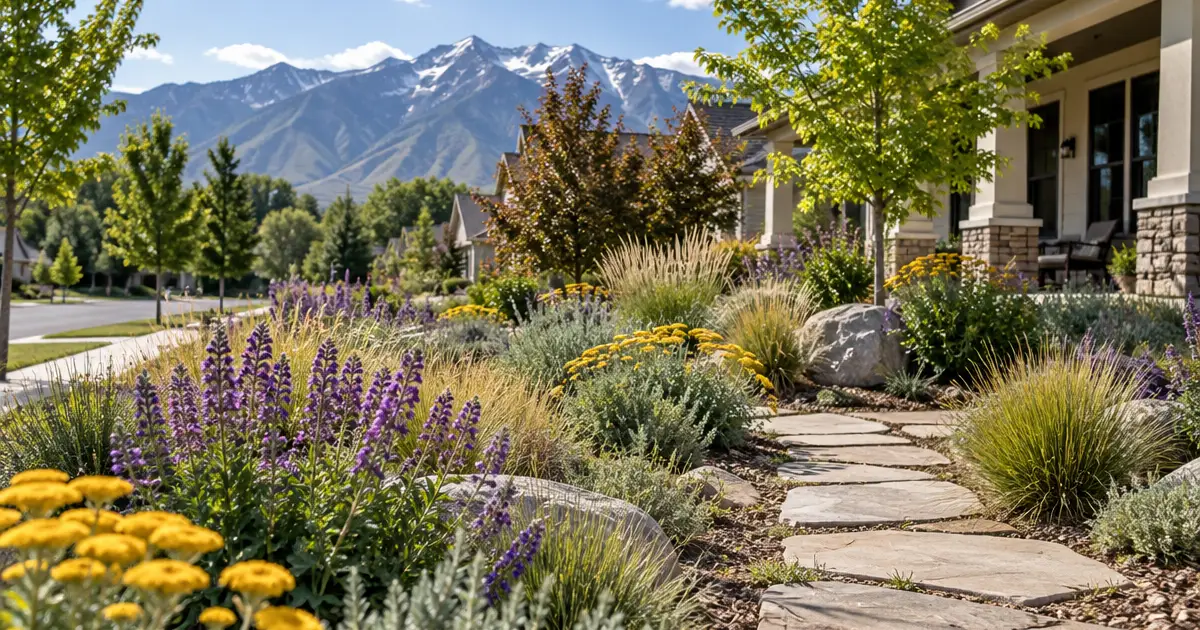
That narrow strip of land between the sidewalk and the street, often called a park strip, can be a landscaping challenge. In Salt Lake City, traditional turf grass is now prohibited in these areas, encouraging homeowners to find more sustainable solutions. This is a fantastic opportunity to boost your home's curb appeal with beautiful, water-wise plants that thrive in our local climate. The best alternatives include drought-tolerant groundcovers, ornamental grasses, and carefully selected hardscaping.
Alpina Studio specializes in creating thoughtful, resilient landscapes. If you're looking for expert guidance, our landscape consultations can help you navigate the city's rules and design the perfect park strip for your home.
Understanding Salt Lake City's Park Strip Regulations
Before you start digging, it's crucial to understand the local rules. Salt Lake City has specific standards for landscaping to promote water conservation and enhance our urban environment. According to the city's official Landscaping and Buffers Code, traditional turf is no longer permitted in park strips.
Key requirements to keep in mind include:
- Minimum Vegetation: Your park strip design must include at least 33% vegetation coverage. This means you can't simply cover the entire area with gravel or concrete.
- Tree Mandate: For park strips wider than 36 inches, you are required to have at least one street tree. This helps grow our urban canopy, providing shade and beauty.
- Tree Permits: Any tree planted in the public right-of-way, which includes the park strip, requires a permit from the Salt Lake City Urban Forestry division. This process ensures the right tree is chosen for the location, avoiding conflicts with utilities and sidewalks.
These regulations are designed to create more sustainable and visually appealing streetscapes. By moving away from thirsty lawns, we can all contribute to a greener, more resilient Salt Lake City.
Why Ditch the Traditional Lawn Strip?
Complying with city code is one reason to reimagine your park strip, but the benefits go much further. Embracing lawn alternatives offers significant advantages for both you and the environment.
- Drastic Water Conservation: Park strips are notoriously difficult to water efficiently. They are often hot, dry, and prone to runoff. Switching to water-wise plants, which are adapted to Utah's climate, can dramatically reduce your outdoor water consumption and lower your utility bills.
- Lower Maintenance: Say goodbye to the awkward task of mowing a tiny, narrow patch of grass. Drought-tolerant perennials, groundcovers, and grasses require far less upkeep. Once established, they typically need only occasional weeding and pruning.
- Enhanced Curb Appeal: A thoughtfully designed park strip adds personality and charm to your home. It's the first part of your landscape visitors see, and a unique combination of textures and colors creates a welcoming and memorable first impression.
- Ecological Benefits: Planting native and adapted species provides a vital habitat for local pollinators like bees and butterflies. This helps support our local ecosystem in a way a monoculture lawn cannot.
Water-Wise Plant Alternatives for Your Park Strip
The key to a successful park strip is choosing plants that can handle the tough conditions: full sun, reflected heat, and limited water. The Water-Wise Plants for Utah Landscapes list from the USU Extension is an excellent resource for finding species that will thrive. Here are some top choices.
Hardy Groundcovers
- Creeping Thyme: This tough, low-growing herb releases a pleasant fragrance when walked on. It forms a dense mat that suppresses weeds and produces tiny pink or purple flowers.
- Sedum (Stonecrop): With hundreds of varieties, sedums are a champion of drought-tolerant gardens. They offer a wide range of textures and colors, from green and blue to red and gold, and many produce star-shaped flowers.
- Clover: An excellent lawn alternative, clover stays green with less water and naturally fixes nitrogen in the soil, reducing the need for fertilizers.
Ornamental and Low-Water Grasses
- Buffalo Grass: A warm-season native grass that requires significantly less water than traditional turf and has a soft, fine texture.
- Tall Fescue: While still a grass, certain varieties of tall fescue have deep root systems that make them more drought-tolerant than Kentucky bluegrass.
- Blue Fescue: This popular ornamental grass forms neat, clumping mounds of silvery-blue foliage, adding fine texture and cool color to your design.
Colorful Perennials
- Penstemon (Beardtongue): A native Utah favorite, penstemon produces tall spikes of tubular flowers that are irresistible to hummingbirds. It comes in shades of purple, pink, red, and blue.
- Yarrow (Achillea): With feathery foliage and flat-topped flower clusters, yarrow is incredibly tough and blooms for an extended period. It's available in colors from classic yellow to pink, white, and red.
- Lavender: Valued for its fragrant purple flowers and silvery foliage, lavender loves sun and heat. It's also deer and rabbit resistant.
Incorporating Hardscaping and Trees
A successful park strip design often blends plants with functional hardscape elements and the right kind of tree.
Hardscape materials like flagstone pavers, decomposed granite, or river rock can create pathways or serve as a decorative mulch. This reduces weed growth and adds structural contrast to the soft textures of plants. Just remember to keep the total area of non-permeable materials under the city's limit to ensure you meet the 33% vegetation coverage rule.
When it comes to trees, choosing the right one is critical. Before you buy anything, consult the city's official tree selection guide and apply for your permit. Look for smaller, upright trees that won't heave the sidewalk or grow into overhead utility lines. Good candidates often include varieties of Serviceberry, Crabapple, or Hornbeam.
Designing Your Perfect Park Strip
Bringing your vision to life can be a rewarding project. For those looking to tackle it themselves, follow a few key steps.
- Assess Your Site: Note how much sun the area gets throughout the day. Test your soil's drainage. Accurately measure the length and width of the strip.
- Create a Simple Plan: Sketch your ideas on paper. Arrange plants in small groups of 3 or 5 for a natural look. Consider bloom times to ensure you have color throughout the seasons.
- Prepare the Area: Remove all existing turf and weeds. Amend the soil with compost to improve its structure and water-holding capacity.
- Install Plants and Materials: Place your plants according to your plan, giving them enough space to reach their mature size. Add any hardscape elements and finish with a layer of mulch to conserve moisture.
If this process seems overwhelming, or you want to ensure a professional, cohesive result, Alpina Studio is here to help. Our team provides expert landscape design and project management services. We serve homeowners throughout Salt Lake City and the surrounding areas, creating beautiful landscapes that are built to last.
Frequently Asked Questions
Do I need a permit to landscape my park strip in Salt Lake City?
For most planting projects involving perennials, grasses, and groundcovers, you do not need a permit. However, you absolutely need a permit from SLC Urban Forestry before planting, removing, or pruning any tree in the park strip.
What are the best low-maintenance plants for a park strip?
The best options are drought-tolerant and adapted to full sun. Top choices include sedums, creeping thyme, yarrow, penstemon, and ornamental grasses like blue fescue. These require minimal water and care once established.
Can I just put down rocks or gravel?
No. Salt Lake City's code requires that park strips have at least 33% live vegetation coverage. While rocks and gravel can be used as accents or mulch, they cannot be the sole material.
How do I get a tree permit from SLC Urban Forestry?
You can typically apply for a tree permit through the Salt Lake City Urban Forestry website. The application process involves specifying the proposed tree species and its exact location to ensure it's a suitable choice for the site.